
2024.06.11. The Fair Economy — The Ministry of Science and ICT (MSIT) and the National Information Society Agency (NIA) said they will hold a briefing for local governments on plans to build smart senior centers at 2 p.m. on the 12th at the NIA Seoul office in Jung-gu, Seoul.
According to MSIT, the smart senior center project aims to upgrade senior centers, which serve as key gathering places for older adults, with smart technology to improve the quality of local welfare services. As part of MSIT's flagship regional initiative, the Smart Village rollout and expansion program, local governments receive budget support to advance digital transformation in their communities and carry out the project independently.
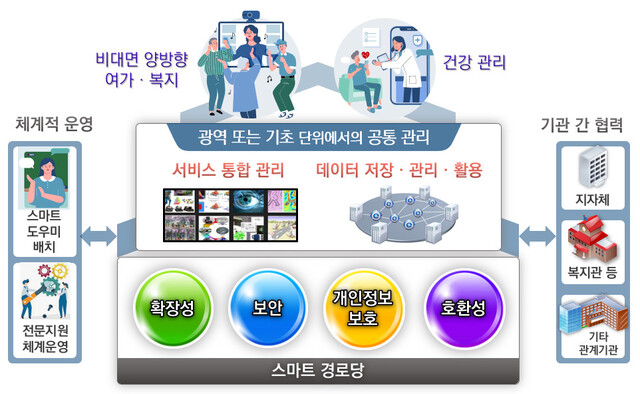
The core service of smart senior centers involves installing real-time video communication solutions in existing senior centers and connecting multiple centers with program providers for the elderly, such as comprehensive welfare centers for senior citizens, to offer elderly users various leisure, welfare, health and education programs.
Since MSIT first launched the smart senior center project in 2021, it has been rolled out in several regions following successful cases in some local governments, including Bucheon City in Gyeonggi Province.
As of last year, 13 local governments had built a total of 889 smart senior centers. This year, the project is being expanded with a goal of establishing 1,391 smart senior centers across 27 local governments.
Because smart senior centers are built individually by local governments, the digital services offered and the way programs are run can vary by region, which may lead to differences in satisfaction among local senior citizens and in project outcomes.
In response, MSIT plans to hold a briefing for officials at local governments, which serve as the implementing bodies, to introduce best practices from top-performing localities and provide guidance on specific project planning, swift implementation and performance management.
The ministry will also invite the Korea Senior Citizens Association, which directly manages and operates senior centers, to share views on how well older adults have responded to existing smart services, what programs they actually need in the field, and what is required for the sustainable operation of smart senior centers.
The briefing is scheduled to cover an explanation of essential elements of smart senior centers, appropriate project scale and various ICT-based programs; a presentation on a best-practice case from Bucheon City in Gyeonggi Province and suggestions on operating and managing smart senior centers based on actual user needs by the Korea Senior Citizens Association; plans for supporting health management for older adults using smart senior centers; and a Q&A session with local government officials.
"To prepare for a super-aged society, MSIT will support the widespread rollout of smart senior centers across the country as a core leisure and welfare service for older adults that leverages digital technology," said Eom Yeol, director-general of information and communications policy at MSIT. "To build on the success of this project, we ask local governments to continue paying close attention and making efforts so that the digital infrastructure and operating programs of smart senior centers can be swiftly supplemented and developed based on the needs of older residents in their areas."


0 Comments
No comments yet.