
2026.10.24. The Fair Economy — The need to protect consumer advance payments has grown as issues have been raised about prepaid installment businesses, such as funeral service companies, investing funds in high-risk assets or providing undue benefits to controlling shareholders.
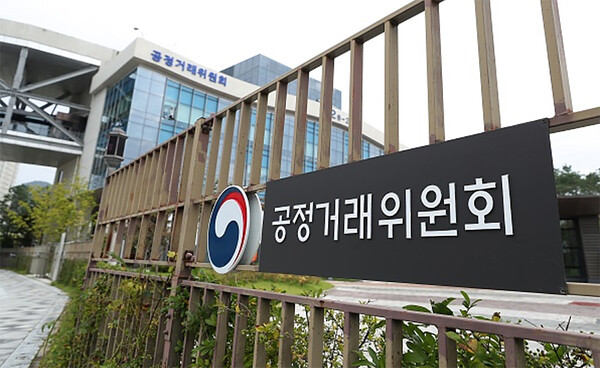
In response, the Fair Trade Commission said it has drawn up a revised 'Guideline on Consumer Protection in Prepaid Installment Transactions,' which sets out the basic direction for managing advance payments and a self-inspection system, and put it into effect starting on the 23rd.
The revised guidelines were prepared pursuant to Article 27-3 of the Installment Transactions Act. Prepaid installment merchants must consider stability, liquidity, and profitability in a balanced manner when managing advance payments, and must undergo sufficient review procedures before investing in high-risk assets or providing excessive benefits to controlling shareholders.
Internal control regulations have also been newly established. Prepaid installment businesses must formulate guidelines for managing advance payments, draw up management plans for each fiscal year, and report them to the board of directors.
Companies with advance payments of 100 billion won (about $72 million) or more as of the end of the previous fiscal year must set up and operate an advance payment management review committee. When the committee deliberates on transactions with related parties or investments in high-risk assets, it must hear the opinions of outside experts, including executives and employees of the payment obligor and accounting professionals.
The Fair Trade Commission plans to urge the industry to comply voluntarily through meetings and other means, expecting that advance payments will be managed soundly and stably as a result.
As of the end of March, the prepaid installment transaction market comprised 11.31 million contract holders and 11.3544 trillion won (about $8.17 billion) in advance payments. Mutual aid product prepayments account for 99% of that total, and 16 companies with 100 billion won or more in advance payments hold more than 90% of the total.
Over the past five years, advance payments held by the 22 mutual aid companies that closed or had their registration revoked exceeded 566.1 billion won (about $407 million), and four of them failed to meet the legally required reserve ratio of 50%. This year, Daeno Welfare Business Group and Agape Life shut down, while the Life entered an extended business suspension.
Cases of misuse and high-risk investment of advance payments have recurred. In 2022, a company that purchased affiliate shares at above-market prices received a corrective order. In 2023, the Supreme Court of Korea finalized a four-year prison sentence for the head of a mutual aid company who had misappropriated 30 billion won (about $21.6 million) in advance payments for personal use.
In 2024, a company invested 50 billion won (about $36 million) in advance payments in cryptocurrency derivatives and lost more than 70% of the principal.
It was revealed in May that BUMOSARANG, the industry's seventh-largest company, had invested 59.5 billion won (about $42.8 million) in advance payments in a leveraged ETF tracking cryptocurrency-themed stocks, and that the book value had plunged to 10.2 billion won (about $7.3 million).
The revised guidelines were finalized after an administrative notice on August 24. The previous guidelines merely recommended avoiding loans and investments involving major shareholders and affiliates, but this revision mandates internal control procedures. However, there is debate over their effectiveness because there are no direct sanctions for violating the guidelines.
The Fair Trade Commission is pushing to amend the Installment Transactions Act to limit credit extensions to controlling shareholders to 50% of capital and to impose fines for failure to establish advance payment management guidelines.
Experts and consumer groups welcomed the move but called for further improvements. The Korea Consumers Federation said, "The damage compensation system needs to be strengthened," and some have pointed out that because the threshold for setting up a review committee is limited to companies with 100 billion won or more in advance payments, oversight of small and midsize companies could become lax.
Abroad, Japan operates a stronger system that requires the full amount of advance payments to be placed in trust, leading some to assess that this guideline amounts to little more than a recommendation.


0 Comments
No comments yet.