
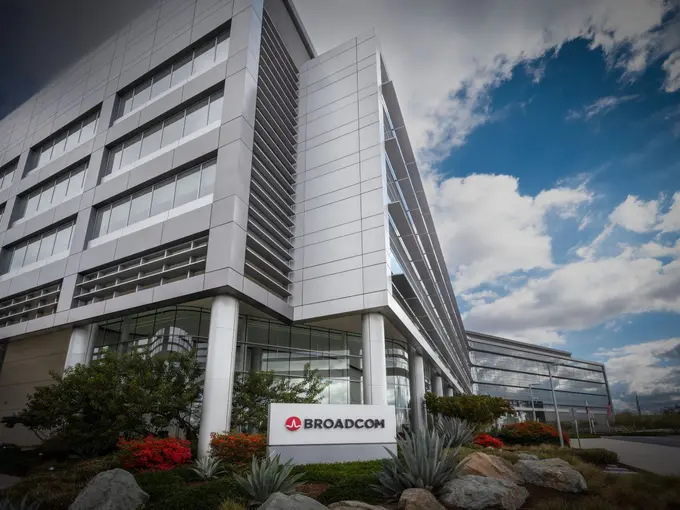
2026.11.03. The Fair Economy — The Supreme Court has finalized an 18.6 billion won (about $13.8 million) fine and a corrective order that the Fair Trade Commission imposed on U.S. chipmaker Broadcom, which pressured Samsung Electronics into a long-term purchase agreement (LTA) by threatening to cut off its supply of parts.
Under the agreement, Samsung Electronics was required to purchase at least $760 million worth of parts annually for three years starting in 2021, and to compensate Broadcom for any shortfall in its purchases. The Fair Trade Commission determined that Broadcom had used unfair tactics such as halting approval of purchase orders, suspending shipments, and stopping production. Broadcom filed a lawsuit challenging the sanctions but lost at the Seoul High Court and again at the Supreme Court.
According to legal sources on Nov. 2, the Supreme Court's First Bench, with Justice Cheon Dae-yeop presiding, finalized the ruling against Broadcom on Oct. 27.
This was a final appeal brought by four Broadcom entities, including its U.S. headquarters and local subsidiaries, seeking to overturn the corrective order and fine imposed by the Fair Trade Commission.
The contract in question was signed in March 2020 between Samsung Electronics and Broadcom for radio frequency front-end (RFFE) parts that improve communication frequency quality, as well as Wi-Fi and Bluetooth components. The contract period ran from 2021 to 2023. At the time, Broadcom was the world's No. 1 player in the relevant market.
The Fair Trade Commission estimated that the contract limited Samsung Electronics' choice of parts suppliers, causing it to bear at least $160 million in additional costs. Samsung Electronics claimed it suffered even greater damages, totaling $326.3 million.
Broadcom notified Samsung Electronics on Feb. 9, 2020, that it planned to suspend transactions and stopped accepting purchase orders after negotiations began. On March 4, Broadcom halted talks and the next day suspended shipments of all parts, technical support, and production of RFFE and connectivity components. It then demanded that Samsung Electronics install its RFFE parts in 100% of its devices or buy $800 million worth annually.
Although Samsung Electronics considered the terms unacceptable, it signed the contract on March 27 out of concern over supply disruptions. Broadcom lifted its restrictions immediately after the signing. Samsung Electronics had worried about production delays for smartphones such as the Galaxy S20 and secured next year's purchase volume in advance, giving up plans to adopt parts from competitors.
Samsung Electronics also used Broadcom's products in the Galaxy S21, launched in 2021, instead of the competitor's parts it had originally considered, and the contract was terminated early in August 2021. During the Fair Trade Commission's investigation, Broadcom proposed a voluntary corrective plan that included setting up a 20 billion won (about $14.8 million) mutual growth fund, but the commission rejected it in June 2023, saying the compensation was insufficient.
The Fair Trade Commission imposed the corrective order and fine in September 2023, and Broadcom filed an administrative lawsuit in November. In May this year, the Seoul High Court found that Broadcom had forced the contract by unusually halting parts supply at will. The court recognized that Broadcom was aware the contract went against Samsung Electronics' will, that its terms were unilaterally unfavorable, and that it aimed to prevent the adoption of competitor parts.
The Seoul High Court's May ruling also recognized Broadcom's superior bargaining position, citing the fact that Samsung Electronics needed at least six months for design changes, software development and certification to switch from existing parts to other products.
Broadcom argued that Samsung Electronics could have bought parts from other companies, but this was not accepted. The Supreme Court also found the lower court's judgment on abuse of superior bargaining position and provision of disadvantages to be reasonable and dismissed the appeal.
A Fair Trade Commission decision has the same effect as a first-instance court ruling, so businesses that disagree with it can challenge it in the Seoul High Court and the Supreme Court.
By contrast, the United States has a three-tier court system starting from federal district courts, while Japan abolished its own administrative appeal process through a 2013 revision of its antimonopoly law and now has a three-tier system starting from district courts.


0 Comments
No comments yet.