
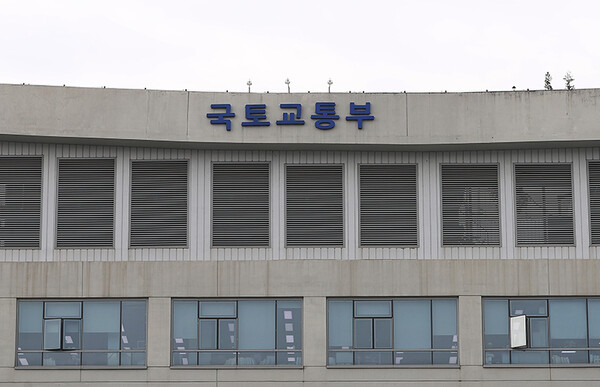
2024.07.09. The Fair Economy — The Ministry of Land, Infrastructure and Transport has laid the groundwork to push ahead with autonomous freight transport on long-distance and wide-area routes, including highways.
The ministry announced on the 9th that, under the revised Autonomous Vehicle Act, it plans to identify long-distance and wide-area routes such as expressways and designate them as test zones for freight transport. It also plans to establish and announce, for the first time, permit standards for autonomous freight transport businesses in order to resolve uncertainty in the industry.
Pilot zones are special zones that grant various regulatory exemptions, such as special exemptions for paid transportation and automotive safety standards, to allow the demonstration of various services using autonomous driving.
Previously, pilot zones were designated based on applications from the governors of the relevant city or province, making it difficult to designate long-distance and regional routes that span multiple cities or provinces, such as highways, as pilot zones.
To address this, the ministry revised the Autonomous Vehicle Act in January, improving the system so that it can designate wide-area routes such as expressways as test zones through consultation with provincial and metropolitan governments, even without an application from the relevant local government.
The ministry emphasized that real-world testing on long-distance routes such as expressways is essential for developing autonomous freight transport technology. It plans to actively identify and designate autonomous freight transport routes under the amended law.
Meanwhile, the Autonomous Vehicle Act includes a special provision (Article 10) that allows paid transport services using autonomous driving technology within pilot operation zones, but specific licensing standards for freight transport had not been established until now.
To resolve industry uncertainty in advance and promote autonomous freight transport businesses, the ministry has established detailed standards and procedures for licensing paid autonomous freight transport services, reflecting opinions from specialized institutions.
With the groundwork for autonomous freight transport now in place, the Korea Expressway Corporation also plans to begin full-scale preparations to introduce autonomous freight transport on highways, including signing a memorandum of understanding (MOU) with autonomous freight transport companies to pledge mutual cooperation.
Park Jin-ho, head of the autonomous vehicle policy division at the Ministry of Land, Infrastructure and Transport, said, "Autonomous freight transport can bring innovative changes in terms of safety and efficiency by reducing driver fatigue on long-distance trips and enabling fuel-efficient driving. With the institutional foundation now established to activate autonomous freight transport, the Ministry will proceed with subsequent administrative procedures, such as designating highway pilot zones and permitting autonomous vehicle paid freight transport businesses, without delay."


0 Comments
No comments yet.