
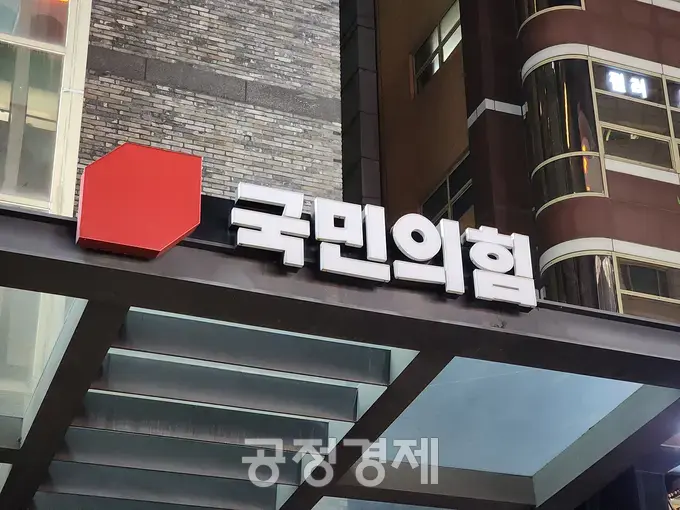
2026.11.04. The Fair Economy — The ruling The Minjoo party of Korea deleted a provision on withdrawing indictments from a special prosecutor bill targeting allegations that the prosecution, National Intelligence Service and Board of Audit and Inspection under the Yoon Suk-yeol administration had fabricated investigations and indictments, then pushed the bill through the National Assembly Legislation and Judiciary Committee. The main opposition People Power Party launched an all-out offensive, staging a mass walkout and announcing a filibuster, calling the bill legislation aimed at eliminating trials related to President Lee Jae-myeong.
The Legislation and Judiciary Committee placed the "fabricated indictment special prosecutor bill" on its full committee agenda and passed an amended version at its First Subcommittee on Bill Review.
The subcommittee consolidated the original 12 cases under investigation while expanding the scope of the West Sea government official shooting case to include the forced repatriation of defected North Korean fishermen. It also newly added allegations of bribery related to the employment of former President Moon Jae-in's former son-in-law, allegations of a manipulated economic feasibility assessment for Wolsong Nuclear Power Plant Unit 1, and allegations of leaking military secrets related to THAAD.
The subcommittee deleted part of the wording in Article 6, which concerns the special prosecutor's authority to decide whether to maintain indictments, as well as Article 8, which set out the special prosecutor's right to demand the transfer of cases. It also removed a provision to establish dedicated warrant judges. The number of prosecutors on loan was cut from 30 to 20, and special investigators were cut from 150 to 70, while the number of seconded public officials was increased from 170 to 210.
The special prosecutor's investigative authority is also a point of contention. The revised Criminal Procedure Act, which took effect on October 2, in principle abolished prosecutors' direct investigative authority. However, Article 14 of its supplementary provisions created an exception allowing the previous rules to apply to special prosecutors, deputy special prosecutors and seconded prosecutors appointed under individual special prosecutor laws. The amendment spells this out explicitly in the bill.
Deputy Justice Minister Lee Jin-su, who attended the bill subcommittee session on November 4, said that in light of the purpose of the revised Criminal Procedure Act, seconding prosecutors was not appropriate, and that even if unavoidable, it should be kept to a minimum. Last month, two panels at the Seoul Central District Court raised questions about the status of seconded special prosecutor's prosecutors after the launch of the Public Prosecution Office, with one postponing a closing argument and the other excluding the seconded prosecutor while proceeding with witness questioning.
People Power Party members of the Legislation and Judiciary Committee walked out in protest when the special prosecutor bill was placed on the plenary agenda on the morning of the fourth, holding a press conference. They reported that they also did not participate in the subcommittee vote in the afternoon. Later, they held a protest rally in front of the committee meeting room, calling out the names of The Minjoo party of Korea members, including Committee Chair Seo Yeong-gyo, one by one.
People Power Party leader Jang Dong-hyeok wrote on Facebook that the claim that deleting only the indictment-withdrawal provision would resolve the problem was false, saying a workaround had been built into the bill. People Power Party lawmaker Park Hyeong-su criticized it as "a special prosecutor law meant to rescue President Lee Jae-myeong."
At a press conference at Cheong Wa Dae on September 18, President Lee Jae-myeong asked the National Assembly to delete the provisions on transferring and disposing of already-indicted cases from the special prosecutor bill and focus instead on fact-finding. However, he said a special prosecutor-led inquiry was still necessary, noting that "if investigative and prosecutorial agencies under my command handle this, it will again raise suspicions of bias." The People Power Party resolved at its general meeting of lawmakers on September 29 to oppose the bill as official party policy.
The Minjoo party of Korea plans to pass the special prosecutor bill at a plenary session on November 5. The People Power Party has announced that if the bill is put on the plenary agenda, it will filibuster every bill submitted that day. If the bill passes, it will become the seventh special prosecutor investigation under the Lee Jae-myeong administration, and the first such team formed since the abolition of the Prosecutors' Office.
The fabricated indictment special prosecutor bill was first proposed on April 30 by Cheon Jun-ho, The Minjoo party of Korea's chief deputy floor leader for floor operations. The original version called for investigating whether fabricated indictments had occurred in 12 cases, including those related to President Lee Jae-myeong, and for determining whether to maintain the indictments. However, as public backlash and concerns within the party grew ahead of the June 3 local elections, processing of the bill was delayed.
Former President Moon Jae-in was not indicted in July due to insufficient evidence on charges including abuse of authority and obstruction of rights related to the Western Sea public official shooting incident. Former Chief of Staff Roh Yeong-min and former Ministry Of Unification Minister Lee In-yeong were also not indicted that same month. Legislation and Judiciary Committee Chair Seo Yeong-gyo argued on October 18 that these were "targeted investigations and political operations by the Yoon Suk-yeol administration," claiming the need for discussions on a rigged prosecution special prosecutor.


0 Comments
No comments yet.