
2024.07.16. The Fair Economy — The government has unveiled a plan to formulate and advance the 'Cross-ministerial Digital Twin Korea Strategy,' aiming to lead the era of deep digitalization with digital twin technology. It will also implement an 'AI-based Support Plan for Upgrading Local Government CCTV Monitoring' to realize a science-and-technology-based safe government for citizens and foster the development of the AI and video analysis industries.
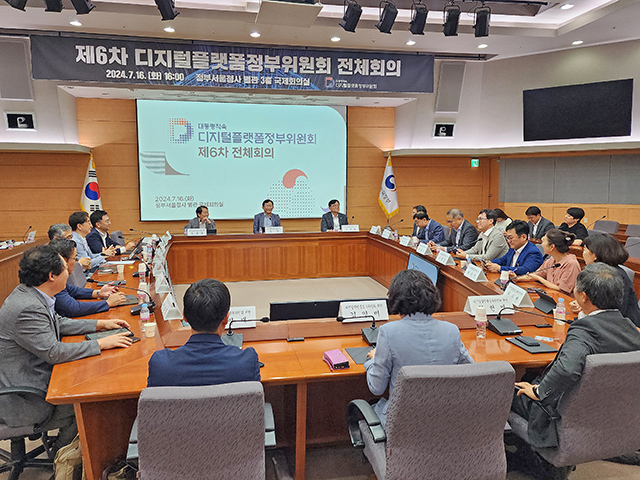
The Presidential Committee of Digital Platform Government, under the direct supervision of the president, held its 6th plenary meeting on the 16th at the Government Seoul Complex with private and government members in attendance, and reviewed and approved these measures.
As global competition for technological supremacy in artificial intelligence (AI) and digital technology intensifies, there is a need to actively utilize digital twin and AI technologies in the public sector. In particular, fostering the digital twin industry can lay the groundwork for solving various national and social challenges, such as natural and social disasters, and can also expand cases of domestic digital companies advancing overseas, as exemplified by Naver's entry into Saudi Arabia. In addition, the CCTV control system, an essential public safety infrastructure for real-time detection and response to violent crimes and disasters, needs to be further upgraded to meet the demands of the AI era.
Accordingly, the Digital Platform Government Committee, under the theme of 'AI and data-driven digital platform government that benefits public welfare and corporate growth', announced and deliberated on two policy tasks discussed with relevant ministries: the Digital Twin Korea Strategy (Ministry of Science and ICT, Digital Platform Government Committee) and the AI-based Local Government CCTV Monitoring System Upgrade Plan (Ministry of the Interior and Safety).
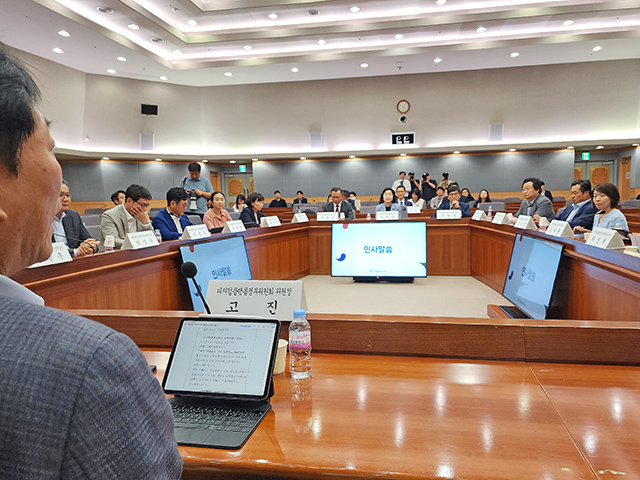
First, the Digital Twin Task Force within the committee and the Ministry of Science and ICT announced the 'Cross-ministerial Digital Twin Korea Strategy' to lead the era of deep digitalization using digital twin technology, which is best suited for data collection and has the broadest usability.
A digital twin is a concept that replicates the structure and behavior of real objects or systems identically in a virtual world, and based on synchronized information between reality and the virtual world, it aids real-world decision-making through predictive processes such as monitoring, analysis, and experimentation.
The strategy aims to 'create a data circulation ecosystem based on digital twins' and 'activate the digital twin industry for public convenience and global leadership.' It presents a vision for realizing 'Digital Twin Korea' across four areas: government, industry, citizens, and technology. In terms of specific implementation tasks, the committee will establish a '(tentative) Digital Twin Korea Public-Private Consultation Body' to foster public-private cooperation and set data standards to facilitate the linkage and use of twin data.
In addition, to support digital transformation across industries based on digital twins, the strategy will prioritize applying twins to various demand areas, while also laying the foundation for domestic companies to enter overseas markets by facilitating the conversion of early-stage services and ideas into products and creating export models.
Furthermore, to ensure citizens can enjoy benefits, the strategy will identify and upgrade digital twin services in key areas such as safety, urban development, transportation, and energy. It will also create 'Digital Twin Pilot Zones' where excellent services are concentrated and linked in specific urban or rural areas, using collected data to generate better services.
In addition, to lead global technology, the strategy will preemptively develop high-level technologies, including core component technologies that determine twin performance (data, simulation, visualization, etc.) and federated core technology development to proactively meet future technology demands, as well as diffusion technologies to enhance the usability of digital twins.
Through this, it is expected to realize data-based scientific administration, lay the foundation for domestic companies to lead the global market, and implement 'Digital Twin Korea' so that citizens can enjoy convenient digital twin services in every corner of their daily lives, thereby proactively responding to the global technology market.
Following this, the Ministry of the Interior and Safety announced its support plan for upgrading local government CCTV monitoring based on AI.
Going forward, AI technology will be actively integrated into CCTV systems installed across local governments nationwide, expanding their utility. Intelligent CCTV is expected to play a frontline role in protecting citizens' safety in daily life. To this end, the Ministry of the Interior and Safety announced that it has prepared an 'AI-based Support Plan for Upgrading Local Government CCTV Monitoring' to realize a science-and-technology-based safe government for citizens and develop the AI and video analysis industries.
Until now, local governments have installed CCTVs for crime prevention and traffic enforcement to monitor dangerous situations in daily life, but relying mainly on the naked eye of monitoring personnel has made it difficult to quickly detect accidents and has limited their active use for disaster safety purposes.
This support plan aims to 'realize a society where citizens' daily lives are safe based on science and technology,' with four strategic tasks to be pursued over the next three years.
First, laws and systems will be improved to clarify the legal basis for installing and operating integrated CCTV monitoring centers and to establish an organic cooperation system that allows video information to be used in disaster safety situations.
In addition, technical infrastructure will be reinforced, including replacing low-quality CCTVs with less than 2 million pixels for intelligent monitoring and expanding CCTVs in blind spots such as parks and walking trails.
Furthermore, in cooperation with the public and private sectors, intelligent video analytics technologies will be demonstrated using six basic detection models—for crowding, heavy rain, urban fires, and other high-usage scenarios—and generative AI models.
Additionally, while ensuring the security of video information, the ministry plans to build an intelligent learning platform based on on-site video information, referring to the 'Trustworthy AI Development Guide (Ministry of Science and ICT)' and the 'Guidelines for Processing Pseudonymized Information (Personal Information Protection Commission)', and support AI and video analytics companies and research institutions in utilizing it.
Through these measures, the government will strengthen the social safety net of local governments nationwide and enable more effective resolution of pending issues, including disasters and safety. Furthermore, it will contribute to enhancing the technological capabilities of domestic companies by encouraging AI and video analytics companies with technical expertise to actively participate in the projects.
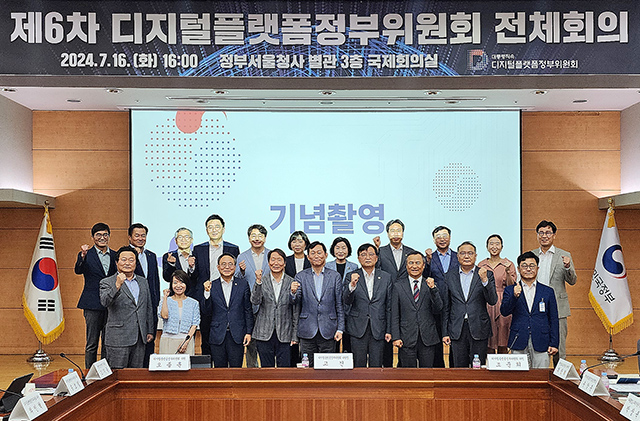
Lee Jong-ho, Minister of Science and ICT, said, "Digital twin is an 'optimization technology for the digital deepening era' that can solve complex real-world problems through data-based scientific decision-making. We will closely cooperate with the committee to realize 'Digital Twin Korea' so that citizens can enjoy widespread convenience in their daily lives."
Lee Sang-min, Minister of the Interior and Safety, said, "We will work closely with private companies to enhance the CCTV control technology and capabilities of local governments so that citizens can lead safe daily lives, and we will strive to contribute to the development of the AI and video analytics industries."
Ko Jin, chairman of the committee, said, "Over the past two years, the committee has worked with relevant ministries to implement a digital platform government that helps resolve difficulties in people's livelihoods and contributes to corporate growth, and tangible results are emerging. We will accelerate the completion of an AI and data-based digital platform government, including the agenda items discussed today, so that citizens can experience the 'most advanced government'."


0 Comments
No comments yet.