
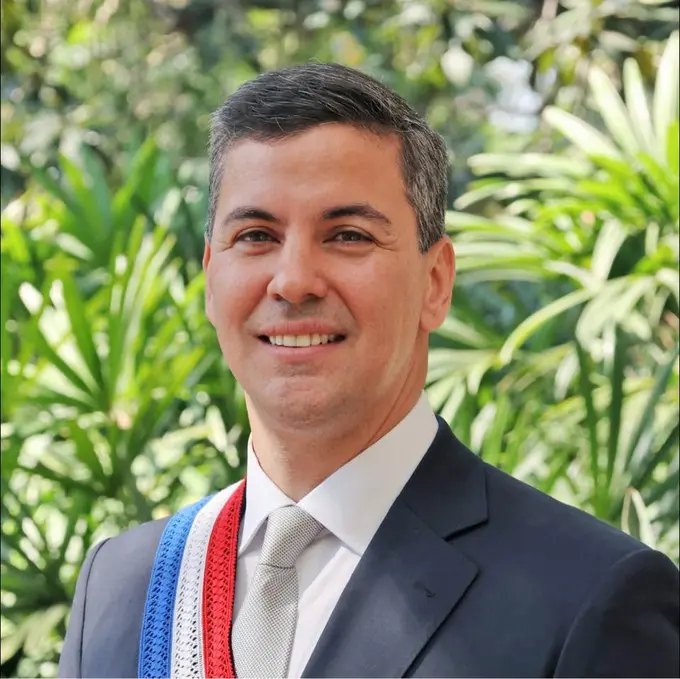
2026.11.06. The Fair Economy — Paraguay's central bank (BCP) intervened in the failure of Ueno Bank, whose solvency ratio was less than half the minimum regulatory requirement, freezing deposits of about 3 million people. The collapse of the bank, which managed about $850 million (about 1.14 trillion won) in public funds, escalated into a political crisis, prompting President Santiago Peña to announce his resignation. The situation has spread to depositor protests and unpaid suspensions of employees at an Argentine partner company.
Reuters, Infobae and other foreign media outlets reported that President Peña announced his resignation on Nov. 5 (local time). The announcement came just over three years into his term, immediately after Congress began impeachment proceedings.
On the 3rd, the BCP announced that Ueno Bank's solvency ratio was 5.56%, less than half of the minimum regulatory standard of 12%, and initiated a resolution process. The BCP said it would first pay depositors 10 million guaraníes (about $1,400).
The process BCP launched is an administrative measure distinct from ordinary court-led bankruptcy proceedings. It allows ordinary depositors' assets to be moved to another, more stable bank before the failed bank's assets are liquidated for creditors. BCP's board voted unanimously on Nov. 2 to begin the process, with the resolution of troubled financial institutions overseen by the bank superintendency within BCP.
Ueno Bank is a major digital bank with customers accounting for 60% of Paraguay's adult population. After obtaining a banking license in 2023, it acquired Visión Banco and secured more than 70 branches nationwide.
Juan Manuel Gustale, president of Ueno Bank, recently said public funds accounted for about a quarter of the bank's total deposits. In effect, local government agencies and state funds had entrusted large sums of money to Ueno Bank even as it struggled with liquidity problems.
On Nov. 3, the day BCP decided to intervene, eight bank executives were arrested, and BCP President Carlos Carvallo resigned. On the night of Nov. 4, protesters gathered in Asunción for a second straight day, chanting "Give us back our money" and "Impeach Santi Peña." Police attempted to disperse the crowd with water cannons and tear gas.
That same day, 35 lawmakers from the opposition and defectors from the ruling party filed an impeachment motion against President Peña and the vice president in the Chamber of Deputies. President Peña promulgated an emergency deposit guarantee law passed by Congress. Prosecutors indicted 27 people. On Nov. 5, Horacio Cartes, leader of the Colorado Party, voiced support for the impeachment process, and President Peña announced his resignation.
As the crisis unfolded, President Peña canceled his planned attendance at the Ibero-American Summit in Spain, citing the need to address domestic issues.
The fallout spread to Argentina as well. According to Clarín, 1,000 remote employees in Argentina at ITTI, an IT consulting firm under Grupo Vázquez, were placed on unpaid suspension for 30 days from Nov. 5 to Dec. 4. The employees claim they learned of the suspension without prior notice, alongside news of the bank's collapse.
La Nación reported that the local subsidiary, Kaitel SRL, cited "force majeure" and failed to pay October wages as well. The employees are set to return on Dec. 5, and the company will continue to cover prepaid health insurance.
In a video posted on X, President Peña said, "I have decided to resign the presidency." He explained the decision was meant to safeguard the country's stability, social peace and democratic institutions. According to Infobae, he urged the return of deposits and protection of public funds, and apologized to the public.
Vice President Pedro Alliana is set to assume the presidency and complete the term until 2028. Under the law, depositors can receive an advance payment of up to 121.7 million guaranies (about 26.56 million won), equivalent to 40 months of the minimum wage, within five business days. The deposit insurance fund's coverage limit is 75 months of the minimum wage per person. Lawyer Raúl Vera Bogado has been nominated as the new BCP governor, subject to Senate confirmation.
According to Clarín and La Nación, President Peña was a shareholder in Ueno Holding, owned by Grupo Vázquez, before divesting his stake last year. Shortly after taking office, in August 2023, he appointed Carvallo, then chief executive of Ueno Bank, as BCP president, sparking controversy over a conflict of interest. La Nación reported that the crisis has revived comparisons with the 2012 impeachment of President Fernando Lugo, who was removed by the Senate in a process that took less than 48 hours, a day after the Chamber of Deputies approved it.


0 Comments
No comments yet.