
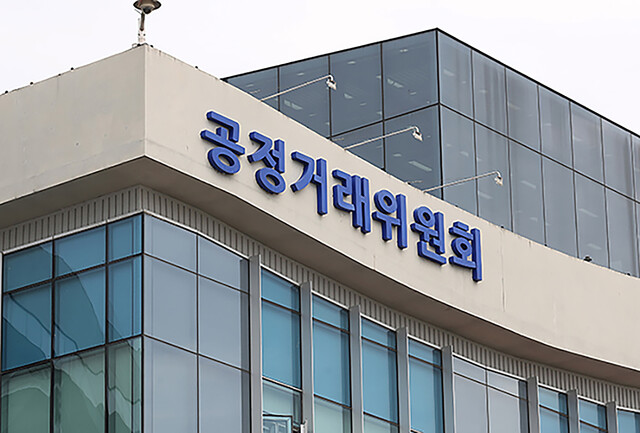
2026.11.06. The Fair Economy — The Korea Fair Trade Commission (FTC) is clarifying its interpretation standards for dark patterns that make cancellation and withdrawal procedures unnecessarily complicated. If a sign-up button appears on a cybermall's homepage but no withdrawal button appears on the login homepage or the page directly linked from it, this constitutes a violation of the law. Designs that force users to scroll excessively to check business operator information are also now subject to discouragement.
The FTC issued an administrative notice on November 6 for a partial amendment to the 'Guidelines on Consumer Protection in Electronic Commerce' containing these provisions.
The amendment also lists as a violation example cases where identity verification not required during purchase or sign-up is unnecessarily demanded when a consumer withdraws membership, cancels a purchase, or terminates a contract. The same applies to designs that prevent consumers from proceeding with cancellation or withdrawal unless they respond to a survey. The amendment also specifies that withdrawal of an offer for custom-made products due to a simple change of mind cannot be restricted unless the business operator is expected to suffer serious harm.
Revisions regarding obstacles to cancellation and withdrawal are included in Section II, General Provisions, Article 14, and Section III, Recommendations, Article 7. It specifies that making cancellation or withdrawal procedures difficult to access beyond what is recognized by trading customs constitutes a method of designing complex procedures. The full text of the amendment states that if a business allows members to apply for sign-up via electronic documents, it must allow withdrawal through the same method. Here, electronic documents refer to all information created, sent, received or stored in electronic form, such as sign-up and withdrawal application forms, emails and online mall consultation boards.
The availability of cancellation for made-to-order products is revised in Section II, General Provisions, Article 10. This item addresses acts obstructing the right to cancel under Article 21(1)(i) of the Act. An example includes posting a phrase on an online mall stating, 'This product is produced after pre-order and cannot be returned.' The target is behavior that indicates or informs that the right to cancel is limited solely because the product is made-to-order, regardless of whether it causes irreparable significant damage. Excessive scrolling for business information verification is addressed in Section III, Recommendations, Article 7, which recommends avoiding interface structures that make it difficult for consumers to easily check such information.
The reason for the amendment is to specify the legal interpretation criteria for obligations under the Electronic Commerce Act, such as dark patterns, withdrawal, and display obligations on cyber malls. This aims to increase predictability for businesses and encourage compliance with the legislative intent. Opinions can be submitted by regular mail, email, or fax to the Chairman of the Korea Fair Trade Commission (Head of Consumer Transaction Policy Division) during the public notice period from November 6 to 26.
The commission previously distributed the 'Guidelines on Operating Online Interfaces to Prevent Dark Patterns' on Oct. 6. This guideline integrates and updates the 'Self-Management Guidelines for Online Dark Patterns' enacted in July 2023 and the 'Q&A on Regulating Six Types of Online Dark Patterns' released in Feb. 2025. It systematizes dark patterns into 13 types across four categories: deceptive, misleading, obstructive and pressuring.
It recommended that cancellation and withdrawal buttons be placed where they can be reached with one click, such as the first screen after login or the My Page, rather than in menus that are hard to predict, such as 'Edit Personal Information' or 'Security Settings.' It also stated that allowing termination only through chatbots or 1:1 consultations could constitute obstruction. The guidelines themselves are not legally binding, and illegality is determined according to the Electronic Commerce Act and consumer protection guidelines.
The current Electronic Commerce Act prohibits five types of dark patterns: sequential price disclosure, pre-selection of specific options, incorrect hierarchy, obstruction of cancellation or withdrawal, and repeated interference. The related amended law took effect in February 2025, and the FTC provided a six-month grace period. Violations may result in corrective orders, business suspension of up to one year, or fines, and depending on the type, administrative fines of 10 million to 20 million won (about $7,200 to $14,400).
Consumer damage is also increasing. According to data received by Park Seong-hun, a lawmaker of the People Power Party on the National Assembly's Political Affairs Committee, from the Korea Consumer Agency, applications for damage relief related to online recurring payments and automatic renewal increased 8.8 times from 17 cases in 2020 to 150 cases in 2025. This year, 132 cases were received by August, bringing the cumulative total since 2020 to 540 cases. By reason, contract termination, cancellation, and penalty fees accounted for 275 cases, more than half.


0 Comments
No comments yet.