
2024.06.18. The Fair Economy — The government will fund research — including drawing up plans for pursuing new technology — to secure technology for detecting, tracing and proving AI manipulation and contamination crimes, as well as technology using an artificial sense of smell, the "electronic nose," to confirm drug possession.
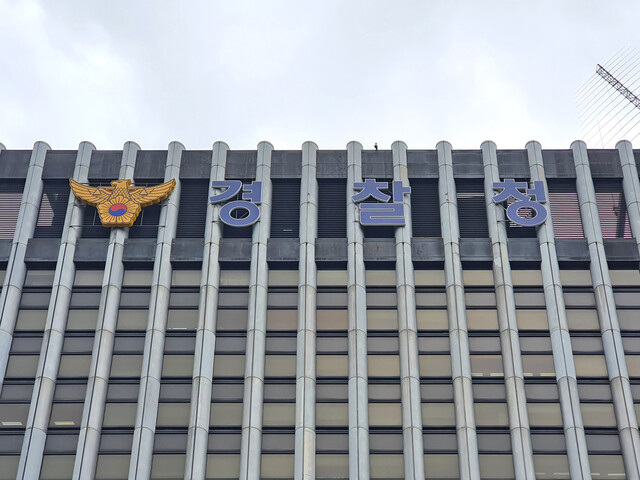
The Ministry of Science and ICT and the Korean National Police Agency announced the "2024 Plan for Selecting New Projects under the Future Policing Challenge Technology Development Program (Convergence Exploratory Research)" on the 18th.
According to the Ministry of Science and ICT and police, the program is being carried out to support creative and challenging technology development in the policing field, with the aim of preemptively responding to uncertain mid- to long-term policing issues of the future.
The advance of new technologies and the resulting changes in lifestyle are giving rise to discrimination and alienation, as well as unforeseen threats to public safety. Amid this situation, a consensus is forming that preemptive responses to crime and accidents are needed through "scientific policing" grounded in scientific analysis and the development of countermeasures.
The Ministry of Science and ICT and police stressed the need for the program, saying that multifaceted research is needed, including support for future-oriented convergence and exploratory research specialized in the policing field, and analysis of the correlation between new technologies and the psychological, economic, social and ecological factors that influence crime.
The program aims to identify new policing needs related to future society and support science-, technology- and data-based convergence exploratory research. Two projects will be selected and funded with a combined total of up to 160 million won (about $112,000).
The first project is the "Study on Ways to Secure Strategic Cybersecurity Technology for Future Policing."
The goal is to secure encrypted computing technology for heterogeneous, unstructured data that can be used in real time in a secure environment guaranteeing confidentiality and integrity for sensitive policing data. The project also aims to lay out plans for securing AI forensic technology capable of detecting, tracing and proving artificial intelligence (AI) manipulation and contamination crimes.
The research will cover: ▲analysis of the current status of encrypted computing and AI forensic technology; ▲establishing a direction for securing encrypted computing technology for building crime prevention systems; ▲establishing a direction for securing AI forensic technology; and ▲drawing up a roadmap for developing encrypted computing and AI forensic technology and presenting strategies for its use.
There is also a project titled the "Study on Building an Integrated System to Block the Smuggling and Distribution of Narcotics in Response to Future Drug Crimes."
This project aims to develop a plan for an integrated management system to block the distribution of narcotics, using electronic nose devices to confirm drug possession, edge cameras and other tools, in spaces such as airports where drugs are smuggled in and distributed. It also aims to study a plan for building technology to trace and block drug smuggling and distribution through the multimodal linkage of electronic nose sensor detection and ambient monitoring systems capable of identifying likely offenders based on abnormal behavior and predicting their movement routes.
To achieve these goals, the project will carry out: ▲analysis of trends in tracing drug smuggling and distribution using electronic nose detection and ambient monitoring systems; ▲research on a development direction for electronic nose sensors for drug detection; ▲research on a development direction for ambient monitoring systems to identify people at potential risk of drug smuggling and distribution; and ▲drawing up a roadmap for developing a drug detection system through the multimodal linkage of electronic nose and ambient monitoring systems and presenting plans for its use.
The application period runs from July 8 to 2 p.m. on July 17, and for any project that receives no applications, a two-week extension of the announcement will be made.
The Ministry of Science and ICT and police said, "We hope many researchers will take interest in and participate in this program, which is designed to identify new policing needs related to future society and support multidisciplinary, science- and data-based convergence exploratory research."


0 Comments
No comments yet.