
2024.07.19. The Fair Economy — The government is revising laws to eradicate "online dark patterns", a method that subtly deceives consumers to gain unfair benefits.
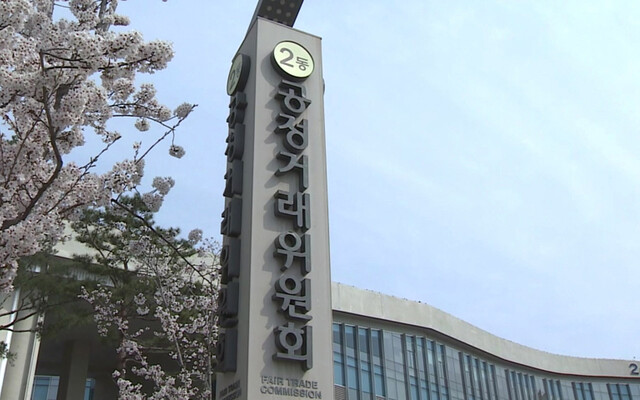
The Fair Trade Commission announced on the 18th that it will publicly notify, from the 18th to August 27, an amendment to the Enforcement Decree and Enforcement Rules of the Electronic Commerce Act, which stipulates necessary matters, in line with the enforcement of the revised "Act on Consumer Protection in Electronic Commerce, etc. (Electronic Commerce Act)" to regulate dark patterns.
The FTC plans to complete the amendments during the second half of the year after fully soliciting opinions from stakeholders and related ministries during the legislative notice period and going through related legislative procedures, including review by the Korea Ministry of Government Legislation.
The Electronic Commerce Act, revised on February 15, introduced regulations for six types of online dark patterns that have caused numerous consumer harms, but which were difficult to regulate under the current law, creating a legislative gap.
It also allows corrective orders and fines to be imposed on businesses that violate the duty to act or refrain from acting regarding online dark patterns, and permits business suspension or penalty surcharges if certain requirements are met.
The FTC prepared this subordinate legislation amendment to specify delegated matters in the Enforcement Decree and Enforcement Rules for the smooth implementation of the revised Electronic Commerce Act, establish standards for suspension of business and administrative fines for violations related to dark patterns, and address other deficiencies.
Specifics on consumer consent and notice periods before price increases or conversion to paid services
To prevent harm from consumers not properly recognizing when recurring payment amounts increase or convert to paid (the 'hidden renewal' type), the revised E-Commerce Act requires online sellers to obtain consumer consent within a period set by presidential decree before the increase or conversion, and to notify consumers of the terms and methods for canceling or terminating, including prices before and after the change, in cases where ▲the recurring payment amount for goods, etc. increases or ▲goods, etc. are supplied free of charge and then converted to paid recurring payment.
Accordingly, this Enforcement Decree amendment specifies that the prior consumer consent and notice period before an increase in recurring payment amounts is 30 days, and for conversion to paid services, it is 14 days.
Specification of the minimum period during which repeated requests are not permitted
The amended E-Commerce Act prohibits acts that interfere with consumers' free decision-making, such as repeatedly requesting changes to content already selected or decided by consumers through pop-up windows (the 'repeated interference' type).
However, this does not apply when consumers are given the option to choose not to receive such requests for a period specified by presidential decree.
Accordingly, this Enforcement Decree amendment excludes cases from repeated interference where consumers are given the option to choose not to be asked again to change content they have already selected or decided for at least 7 days.
Specification of the method for notifying legitimate reasons for not being able to display or advertise the total amount
The amended E-Commerce Act prohibits acts (the 'sequential disclosure pricing' type) where, on the first screen displaying or advertising prices through a cyber mall, only part of the total amount that consumers must necessarily pay to purchase or use goods is displayed or advertised without legitimate reason, even though the total amount could be informed.
However, it excludes cases where there is a legitimate reason for not displaying or advertising the total amount, and the reason is communicated to consumers in accordance with the Prime Minister's decree.
Accordingly, this Enforcement Rules amendment excludes cases from sequential disclosure pricing where the legitimate reason for not displaying or advertising the total amount and additional items are excluded, and it is informed on the first screen displaying or advertising prices that the price of additional items may vary depending on consumer choice.
Establishment of standards for suspension of business and administrative fines for violations related to dark patterns
The amended E-Commerce Act stipulates that businesses violating affirmative or negative duties regarding online dark patterns will be subject to corrective measures and fines of up to 5 million won, and may be ordered to suspend business for up to one year or pay surcharges if certain conditions are met. Specific standards for business suspension and fines were needed.
Accordingly, the amendment to the Enforcement Decree adds violations related to six types of dark patterns to the list of offenses subject to suspension of business and administrative fines, and establishes new standards for suspension periods and fine amounts based on the number of violations.
Next, regarding personal information protection, it adds a legal basis to delegate the procedure for disclosing shopping malls with frequent complaints to a notice, and adjusts the administrative information shared and checked by officials when reporting or changing reports of online sales business to match reality.


0 Comments
No comments yet.