
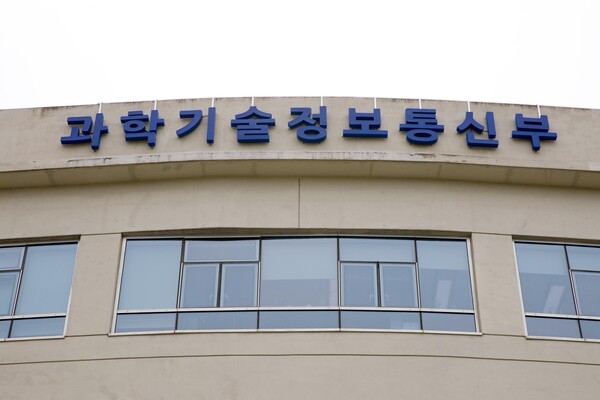
2024.06.10. The Fair Economy — The government has carried out annual monitoring of public projects that build broadcast equipment — video, audio and lighting systems — but this year's related budget was completely cut, bringing monitoring work to a complete halt. The suspension of monitoring activity, which had helped ensure that public-sector broadcast equipment projects were carried out lawfully and appropriately, is now leading to a rash of illegal and excessive procurement cases.
According to The Fair Economy's reporting, the Ministry of Science and ICT has allocated about 600 million won (about $435,000) annually for the 'Foundation for Vitalizing the Public Broadcasting Equipment Market' project. This budget has supported: ▲operation of guidelines for the installation and operation of broadcasting equipment in public institutions ▲consulting support through a broadcasting equipment help desk ▲formation and operation of a pool of broadcasting equipment experts ▲holding practical training on the installation and operation of broadcasting equipment in public institutions ▲promotional support for domestic broadcasting equipment manufacturers ▲support for institutional improvements related to public sector broadcasting equipment procurement.
In addition, monitoring activities for public broadcasting equipment installation projects have been carried out through the 'operation of guidelines for the installation and operation of broadcasting equipment in public institutions,' a sub-project of the foundation for vitalizing the public broadcasting equipment market. The broadcasting equipment industry has assessed that these government monitoring activities have achieved outcomes such as fair project implementation and savings of citizens' tax money by detecting and correcting illegal and excessive orders by ordering agencies in advance.
However, the Ministry of Science and ICT failed to secure the budget for the foundation for vitalizing the public broadcasting equipment market this year. To be precise, the budget was entirely cut. As a result, the budget for monitoring broadcasting equipment installation projects became zero. The budget shortfall led to a complete suspension of monitoring activities, and as a result, several illegal and excessive orders have occurred.
In one case, local government A publicly released a request for proposals (RFP) ahead of launching a broadcast equipment project, and broadcast equipment companies submitted various opinions on the pre-released RFP. However, A pushed ahead with the bidding announcement without reflecting any of the opinions submitted. Under the Ministry of Science and ICT's notice, the Guidelines for Building and Operating Broadcast Equipment at Public Institutions, when a contracting agency does not accept all of the opinions submitted during the advance release of an RFP, it must convene an 'RFP Review Committee' to examine whether the RFP was prepared lawfully and appropriately.
Institutions B and C, which violated the guidelines, were in similar situations.
Officials at these public institutions said they were unaware of the guidelines because they had not been in charge of broadcasting equipment for long. In response, the industry says, "Until last year, the monitoring agency for broadcasting equipment installation projects provided opinions on guideline compliance at the RFP pre-disclosure stage, so these problems did not arise."
With monitoring activities suspended, projects with excessive budgets are also emerging.
Institution D's audio equipment project is one such case. Industry sources say that an analysis of the project's RFP shows equipment meeting the project's purpose could be procured for about 60% of the allocated budget. An official at one company said, "We suspect the contracting agency for this project padded the budget in order to bring in expensive foreign equipment," adding, "Until last year, the institution carrying out monitoring activity would raise opinions on projects with excessive orders, achieving budget savings. But now that no institution performs that work, it is difficult to catch excessive ordering by contracting agencies in time."
It has been six months since monitoring of public institutions' broadcast equipment projects was suspended, but there is no sign that such illegal and excessive ordering cases are letting up.
That is because broadcast equipment is specialized equipment requiring a high degree of expertise, from design and construction to operation and maintenance, making it difficult for ordinary citizens or general administrative staff at contracting agencies — who are not specialists — to identify or catch illegal or excessive orders.
Accordingly, a consensus is building in the industry that countermeasures must be worked out as soon as possible.
Kim Yeong-cheol, a professor at the ICT Polytech Institute of Korea and president of the Korea Digital Contents Society, said, "A bigger problem than the Ministry of Science and ICT's failure to secure a budget for monitoring public institutions' broadcast equipment projects is that it still has not come up with an effective alternative. The longer countermeasures are delayed, the more the government ends up effectively condoning illegal and excessive ordering. I understand that the complete budget cut has already scattered the workforce of the institution that carried out monitoring, so even if the budget is secured again next year, it is doubtful whether a workforce with the necessary expertise can be reassembled."
As Professor Kim Yeong-cheol pointed out, the Korea Electronics Association (KEA), which had been entrusted by the government with monitoring public broadcasting equipment projects until last year, has seen its human infrastructure virtually collapse: a broadcasting equipment expert retired early this year, and staff below the department head were transferred to other departments.
The Ministry of Science and ICT is, of course, considering alternatives as well. A ministry official said, "We plan to revise the guidelines to transfer responsibility for guideline-related work from KEA to Document (RAPA)." In other words, tasks such as recommending proposal evaluation committee members and providing the list of recommendations, as set out in the guidelines, will be shifted from KEA to RAPA.
However, the ministry has yet to offer a concrete plan for securing a budget for monitoring public projects. The official said, "Given the lack of a budget, it will be difficult for RAPA to immediately hire specialized personnel and carry out monitoring activity."
With the government having failed to secure a budget for monitoring public institutions' broadcast equipment projects, and alternatives slow to materialize, the problem of illegal and excessive ordering is expected to continue to flare up for the time being.
Industry sources are calling on the government to resume monitoring activity within this year, even if that requires drawing up a supplementary budget.


0 Comments
No comments yet.