
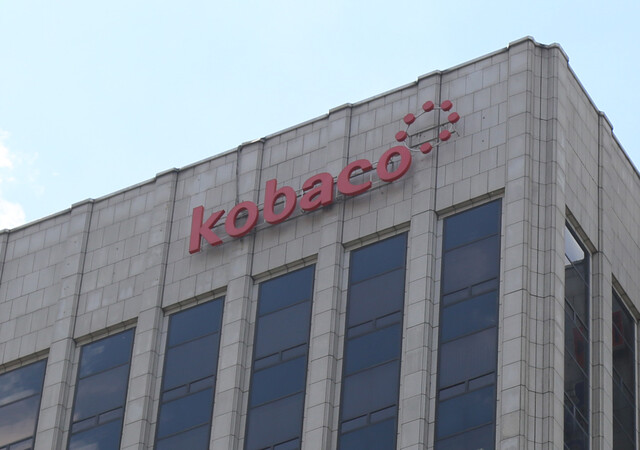
2024.06.12. The Fair Economy — Korea Broadcasting Advertising Promotion Corporation (Kobaco) has been found to have improperly constituted its proposal evaluation committees while pursuing public projects through contract-by-negotiation. It also failed to properly observe regulations on managing project funds.
The Korea Communications Commission (KCC) recently released a comprehensive audit report on Kobaco detailing these findings.
Kobaco is a public corporation under the KCC, established to handle advertising sales agency services, promote balanced development of broadcast advertising, and revitalize the broadcast advertising industry.
According to the KCC, around August 2022, Kobaco convened a committee to select a preferred negotiating party for a service project with an estimated value of about 122.72 million won (about $89,000).
Under Articles 4(1) through 4(3) of Kobaco's "Standards for Handling Proposal Evaluation in Contract-by-Negotiation," the committee must consist of at least seven members if the estimated value is 100 million won (about $69,700) or more, at least five members if it is less than 100 million won, and at least three members if a re-announced bid fails and a direct contract is pursued. In all cases, external members must constitute a majority of the evaluation committee.
Since the project in question had an estimated value of 100 million won or more, the committee should have consisted of at least seven members with external members in the majority. Instead, Kobaco disregarded its own rules and formed a committee of just six members, including only three external members, before proceeding with the proposal evaluation.
The KCC determined that Kobaco violated its proposal evaluation committee composition standards — including the minimum member count and the external-member majority requirement — in a total of 10 projects between January 2022 and March 2023.
Kobaco, which did not even follow its own regulations, also failed to observe rules set by the Korea Communications Commission and the Ministry of Economy and Finance.
Under the Ministry of Economy and Finance's "Integrated Guidelines for Management of State Subsidies," a subsidized project operator may carry over to the following fiscal year, with the approval of the head of the relevant central government agency, "expenses for which a disbursement obligation was incurred within the year but that could not be paid out within the year for unavoidable reasons, as well as associated incidental expenses for which no disbursement obligation was incurred."
Furthermore, under the "Korea Communications Commission Budget and Fund Project Management Guidelines," a performing agency must submit details to the competent department—including the carried-over project and budget, the reason for the carryover and an assessment of its appropriateness, the progress of the project in the relevant fiscal year, supporting documents regarding the reason for the carryover, and a plan for executing the carried-over budget—to obtain approval for using funds in the next fiscal year after receiving project funds.
However, while performing public interest advertising subsidy projects from 2019 to 2022, Kobaco falsely reported in its settlement reports that the remaining balance of 130.29 million won (about $90,700) of the contract amount had been fully disbursed within the year, without prior approval from the Korea Communications Commission. In reality, it carried over the remaining balance to the following year and disbursed it after the service was completed, violating regulations.
The KCC issued a warning to Kobaco's president, saying, "Do not violate the standards for forming evaluation committees, and handle subsidy disbursement and settlement matters thoroughly."
In addition, Kobaco received a total of 10 audit findings, including: improper budget execution for head office meeting expenses (warning); improper operation of the Kobaco training institute (notice); improper operation of the hiring system and improper hiring procedures for non-regular specialist advisers (warning); improper deduction of annual leave for tardiness, early leaves and outings (notice); improper operation of pay-reduction rules for employees subject to demotion or suspension (notice); improper operation of paid holiday status for the founding anniversary (notice); improper selection of support project operators for promoting broadcast advertising by innovative small and medium-sized enterprises (warning); and improper execution of travel expenses related to state subsidy projects (notice).


0 Comments
No comments yet.