
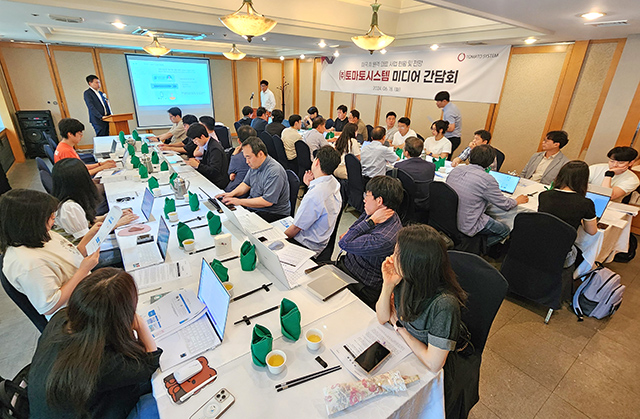
2024.06.18. The Fair Economy — Tomato System, an information technology (IT) service solutions company, is set to make a full-fledged entry into the U.S. digital healthcare market.
Tomato System held a press briefing on the 18th themed "AI Telehealth Business: Current Status and Outlook," unveiling plans to advance its telehealth business in the United States through its US subsidiary, CyberMDCare.
In May, Tomato System acquired a 51% stake in CyberMDCare to expand its digital healthcare business in the US and support CyberMDCare's leading role in driving the business, making it a subsidiary.
CyberMDCare provides video consultations and telehealth services to Medicare beneficiaries aged 65 and older and Medicaid beneficiaries from low-income households in the US.
Remote Patient Monitoring (RPM), one of its telehealth services, provides patients with devices that measure blood pressure, blood sugar, weight and oxygen saturation, with the devices monitoring the patient's health condition.
After measuring the biometric data, these devices relay the results to doctors in real time through a smartphone app, allowing doctors to make faster and more accurate diagnoses and prescriptions based on the collected data.
At the briefing, Tomato System spoke in detail about plans to expand CyberMDCare's business in the US.
The core of the plan is to integrate various solutions to offer an all-in-one digital healthcare service in the US telehealth market.
Specifically, the company plans to collaborate with the personalized diet management solution jaeda, the AI-based personalized fitness service T-ON CARE, and the cancer patient information platform D&Life, among others, to begin upgrading its services.
In particular, starting in July, the company plans to operate a Smart Urgent Care Center dedicated to emergency patients outside regular clinic hours. The center is expected to reduce unnecessary medical spending and allow for proactive, quick checks and prescriptions for patients' health.
The company also explained CyberMDCare's business model, which it says is competitive compared to other companies.
The company aims to provide services at lower costs than competitors to reduce medical expenditures for insurance companies and increase revenue for medical institutions.
CyberMDCare estimates that using its services could save medical groups or doctors about $600 (about 830,000 won) per patient per year compared to other companies.
For example, a single ambulance ride in the US typically costs around $1,000 at minimum, but using the RPM service can help determine in advance whether a situation is actually an emergency, preventing unnecessary medical spending.
The company also disclosed its collaboration achievements with local insurers.
It also emphasized that it had become the first Korean healthcare company to sign a service contract and business agreement with Champion HealthPlan, a US insurer, and would continue to build on that business relationship.
Champion HealthPlan is an insurer that primarily operates in California, serving Medicare Advantage enrollees. It plans to pursue joint sales efforts and co-develop services with CyberMDCare going forward.
Tomato System and CyberMDCare estimate the number of RPM service users at 100,000 and expect annual revenue from these customers to reach $10 million (about 13.8 billion won).
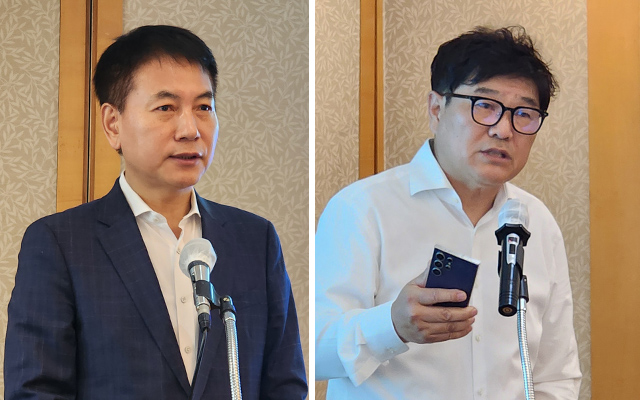
David Kang, CEO of CyberMDCare, said, "We plan to expand sales to various regions outside California, including Medicare Advantage and FQHC sales channels, and begin securing a meaningful market share in earnest starting next year." He added, "We also plan to focus on bringing in new app users by selling RPM-compatible medical devices — such as blood pressure monitors, blood glucose meters, scales and oxygen saturation monitors — online through major local retail channels."
Lee Sang-don, CEO of Tomato System, said, "The US healthcare system places strong emphasis on prevention, which makes it well-suited for the spread of healthcare solutions that continuously monitor patients' health. Korea, on the other hand, has a well-established treatment-centered medical system, but institutional support for disease prevention needs to be strengthened further. I hope the media will pay close attention so that RPM services can spread in Korea and help protect citizens' lives and health."
However, there are some points in the business plans presented by Tomato System and CyberMDCare that warrant closer scrutiny.
First, there is the matter of how the performance and functions of its RPM devices were adjusted to allow for distribution at a lower price than competitors. More expensive RPM devices from other companies have a built-in mobile communication module that lets them independently transmit blood pressure, blood sugar, weight and oxygen saturation data to the RPM system.
By contrast, according to Tomato System, the RPM devices distributed by CyberMDCare forgo a mobile communication module to secure price competitiveness, relying instead on Bluetooth. This means the devices cannot communicate directly with the remote system; instead, biometric data is transmitted to the RPM system through the user's smartphone, which is connected to the device via Bluetooth.
However, if the user's smartphone is not functioning properly due to breakdown, malfunction, loss, or other reasons, these RPM devices cannot transmit data to the system.
In other words, while leaving out the component that would let the device communicate independently with the system lowered the product's price, it also raises the possibility that, in an emergency, these devices could end up "dead" — unable to send biometric data to the system at all.
It is also uncertain whether the devices can integrate with other globally popular healthcare devices from companies like Samsung Electronics, Apple Inc., and Xiaomi United Arab Emirates. If integration with third-party devices is impossible, users who already own smart scales would need to purchase a dedicated scale to use CyberMDCare's RPM service.


0 Comments
No comments yet.