
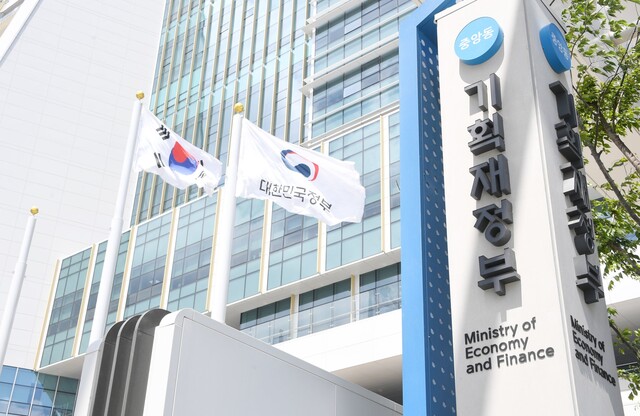
2024.07.25. The Fair Economy — The child deduction for inheritance and gift taxes will be expanded tenfold from 50 million won per person to 500 million won. The top inheritance tax rate will be lowered, and lower tax brackets will be widened to reduce the inheritance tax burden.
The government held the Tax Development Review Committee on the 25th and finalized and announced the '2024 Tax Revision Bill' containing these measures.
The government will raise the child deduction from 50 million won to 500 million won per person to reduce the burden of inheritance and gift taxes. In addition, the top inheritance tax rate will be lowered to 40%, and the lower tax brackets will be expanded, such as raising the income threshold for the 10% rate from 100 million won or less to 200 million won or less. This is intended to reflect changes in conditions such as prices and assets, and to adjust inheritance and gift tax rates, tax brackets, and deduction amounts to ease excessive tax burdens.
A new marriage tax credit will be introduced. Couples who register their marriage will receive a tax credit of up to 1 million won (500,000 won per spouse). This will apply for three years to marriages registered on or after January 1, 2024, and is limited to once in a lifetime.
The scope of tax support for the Home Buyers' Synthesized Savings Account will be expanded. To increase home-buying opportunities for married couples, spouses other than the head of household will be added to the targets for income tax deductions and interest income tax exemptions on the account.
The period for the one-household, one-house special exception for marriage will be extended. Under this measure, when a man and a woman who each own one house marry and become a household owning two houses, the period during which they are treated as a one-house household for capital gains tax and comprehensive real estate tax purposes will be extended from 5 years to 10 years.
To ease the burden of child-rearing costs, the child tax credit for children and grandchildren (ages 8 to 20) will be expanded, and childbirth support payments made by companies to employees (excluding related parties who are relatives) will be fully tax-exempt as earned income (recognized as corporate expenses).
There are also revisions to support small business owners and SMEs.
To strengthen the social safety net for small businesses and small business owners, the income deduction limit for the Yellow Umbrella Mutual Aid will be raised and the deduction criteria for corporate representatives will be eased. The income deduction limit for the Yellow Umbrella Mutual Aid will increase from 5 million won to 6 million won for business/earned income of 40 million won or less, and from 3 million won to 4 million won for income between 40 million and 100 million won. Corporate representatives with total annual salary of 80 million won or less (up from the previous 70 million won) will be allowed to receive the Yellow Umbrella Mutual Aid income deduction.
To stabilize rents for small business owners, the tax credit application deadline for landlords who reduce commercial rents will be extended by one year to December 31, 2025.
The application deadline for special collection provisions on delinquent taxes for small business operators will be extended. The target delinquent taxes will be expanded from those deemed difficult to collect as of July 25, 2023, to those as of July 25, 2024. The application period will also be extended by one year to December 31, 2028.
The tax law revisions aim to promote investment, employment, and regional development.
The grace period for small and medium-sized enterprises will be extended. To support business growth, the grace period during which companies can continue to receive tax benefits as SMEs even if they exceed the SME criteria due to growth will be extended from 3 to 5 years. SMEs listed on the KOSPI or KOSDAQ will receive an additional 2 years, for a total of 7 years of benefits.
The scope of research and development (R&D) tax credits will be expanded. For labor costs, when the majority of an employee's working hours are devoted to research on national strategic technologies or new growth and source technologies, the actual research hours will be prorated and the corresponding credit rate applied to each. Expenses such as facility rental fees will also be included among the costs eligible for R&D credits for national strategic technologies and new growth and source technologies. Credits will also apply to expenses for workforce development provided to people who are not employees or officers of the company, such as lecture fees, textbook costs and training materials.


0 Comments
No comments yet.