
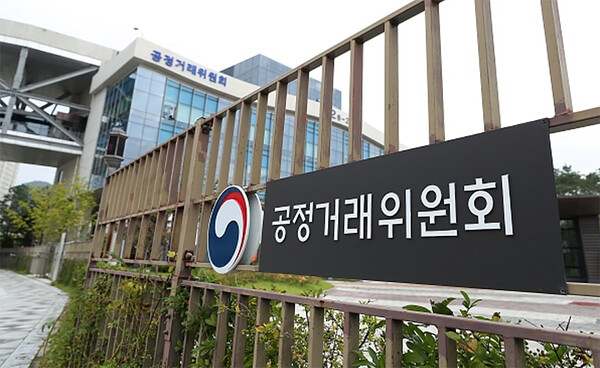
2024.06.13. The Fair Economy — The Fair Trade Commission (FTC) said on the 13th that it has decided to issue a corrective order and provisionally impose a fine of 140 billion won (about $100 million) on Coupang and CPLB for violating the ban on customer inducement by deceptive means under the Monopoly Regulation and Fair Trade Act (Fair Trade Act), and to refer the two companies to the prosecution.
CPLB is a 100% subsidiary of Coupang that exclusively supplies private brand (PB) products. It was established in July 2020 after spinning off from Coupang's PB division.
The FTC said it expects this measure to guarantee consumers' right to make rational product choices and induce fair competition based on price and quality, providing an opportunity for consumers to buy affordable, high-quality products during the era of high inflation.
It further stated that the move is expected to establish a fair competitive order between giant platforms holding dual positions as transaction intermediaries and sellers, and competing businesses (vendors), while raising awareness among online shopping operators to ensure transparent and fair algorithm operation.
The FTC added that it will continue to monitor, without discriminating between domestic and foreign businesses, any conduct that deceives consumers and risks undermining fair trade order, and will strictly enforce the law whenever violations occur.
Coupang pushed back against the FTC's decision.
Coupang stressed, "Unlike other open markets, we have spent tens of trillions of won (tens of billions of dollars) every year to directly purchase Rocket Delivery products, deliver them quickly, and even guarantee free returns."
Coupang said its "Ranking" is a service that "recommends" fast, high-quality, and affordable products to customers, adding that customers come to Coupang to use this distinctive Rocket Delivery service and have long taken for granted that Coupang would recommend Rocket Delivery products to them.
Coupang also argued that the FTC's decision—claiming that its Rocket Delivery service, which has won the rational choice of many consumers for its low prices and delivery convenience, amounts to deceiving consumers—ignores the choices of smart consumers in the digital era and is an anachronistic, anti-innovation measure.
Coupang expressed regret over what it called the FTC's unbalanced decision — one that, without precedent anywhere in the world, took issue with "product display" and imposed an excessive fine exceeding half of the total fines levied on Korea's 500 largest companies last year, while also deciding to file a criminal complaint. The company said it would actively argue the unfairness of the decision in court through administrative litigation.
"Abusing Dual Status to Disadvantage Other Companies' Products"
According to the FTC, Coupang is the top player in the online shopping market, engaging in both "the sale of its own products (direct-purchase products plus private-brand products)" and "the brokerage of third-party sellers' products." In other words, Coupang holds a dual status as both a platform that sets and operates the criteria for search rankings and brokers product transactions, and a seller of its own products—a dual status that creates a situation in which conflicts of interest can arise between the sale of its own products and the sale of merchants' brokered products.
For reference, direct-purchase products are items that Coupang buys from suppliers and sells directly, while private-brand (PB) products are items that Coupang itself plans and sells, outsourcing only the manufacturing to subcontractors.
Brokered products are items sold by merchants that operate stores on Coupang's online shopping platform, and Coupang collects a transaction fee whenever a brokered product is sold.
Based on transaction value, the ratio of Coupang's own products to brokered products sold on its platform shifted from about 60:40 in 2019 to about 70:30 in 2022.
Coupang has designed and operated its product search ranking system, called "Coupang Ranking," to primarily reflect actual consumer responses such as sales volume, the number of purchase reviews, and average star ratings. When Coupang introduced its brokered-product business in 2015, it was reported that the company planned to "provide product search rankings based on objective data such as sales volume." As a result, consumers have come to perceive products with higher search rankings as having better sales and reviews, and search rankings have a significant influence on consumers' purchasing decisions.
Against this backdrop, Coupang and CPLB engaged in deceptive practices to boost sales of their own products — manipulating the search ranking algorithm and having employees write reviews and give high star ratings — to push their own products above the more than 400 million brokered products sold by 210,000 merchants on Coupang's online marketplace. As a result, consumers were misled into believing Coupang's own products were superior to merchants' products, leading them to choose and purchase Coupang's products and thereby inducing them to transact with Coupang.
"Using Automated Algorithms to Make Its Own Products Stand Out"
From February 2019 to July 2023, Coupang used three algorithms to exclude brokered products and fix at least 64,250 of its own products (58,658 direct-purchase products and 5,592 PB products) at the top of search rankings.
The three algorithms were Product Promotion, SGP, and the Cold-start Framework.
Product Promotion fixed direct-purchase and PB products at the top of rankings, such as positions 1, 2 and 3; SGP (Strategic Good Product) applied a 1.5-times weighting to the base search ranking score of direct-purchase fashion products and PB products; and the Cold-start Framework fixed up to 15 direct-purchase and PB products per search term at intervals of five ranking positions starting from rank 10.
Coupang's products that were fixed at the top of search results in this way were not distinguished from other products in the search results, so consumers, unaware that these products had been artificially fixed at the top, were highly likely to assume—just as with other products—that they had been ranked highly based on objective data such as sales volume.
Moreover, the products Coupang fixed at the top of search rankings also included "poorly selling products" and "products for which Coupang had arranged to receive rebates from suppliers."
Furthermore, even after recognizing that this deceptive conduct could be illegal, Coupang continued its existing practice (Promotion) and added the SGP and Cold-start Framework methods to continue the conduct.
The FTC pointed out that Coupang's manipulation of search rankings produced the following results.
First, the exposure and total sales revenue of Coupang's own products fixed at the top increased significantly.
Second, the 210,000 merchants selling brokered products on Coupang's online marketplace found it difficult to rank their own brokered products highly, because Coupang continuously fixed its own products at the top.
Third, consumers' rational purchasing choices were undermined. A survey Coupang itself conducted in May 2021 identified "consumers cannot find the products they want at the top of search rankings" as one of the biggest complaints about Coupang's search results. Coupang's own internal materials likewise confirm that "most of the top search results for certain search terms are PB products, undermining the diversity of search results and causing complaints from other brand companies," and that "products that do not fit the current season remain artificially at the top of rankings, giving customers an uncomfortable experience."
Fourth, according to Coupang's internal materials, the average selling price of products on Coupang's online marketplace falls when Coupang does not fix its own products at the top—confirming that the manipulation of search rankings raised the average selling price of products.
The reason is that, when Coupang continuously fixes its own products at the top, merchants who monitor search rankings in real time—because rankings are directly tied to sales volume—have no incentive to lower prices, since doing so would not get them exposed at the top anyway, and Coupang itself has no incentive to lower prices either, since its own products are already exposed at the top.
"Mobilized Coupang Employees for Long-Term Rating Manipulation"
In January 2019, Coupang attempted to collect purchase reviews for PB products through a "Coupang Experience Team" composed of general consumers. However, collecting reviews via the team was difficult because Coupang's PB products lacked consumer awareness.
Accordingly, from February of that year to July 2023, Coupang had 2,297 employees write positive purchase reviews and give high star ratings for at least 7,342 PB products, writing 72,614 purchase reviews with an average rating of 4.8 stars to favorably position PB products at the top of search rankings. The FTC named this employee-mobilized conduct "Employee Bine."
In particular, Coupang organized these actions under a company-wide goal, deciding to implement Employee Bine through its CLT (Coupang Leadership Team), an operating committee composed of key executives. It implemented Employee Bine for 78% of PB products launched in the first two years.
Coupang exploited its own position, well aware of the effect that purchase review counts and average star ratings have on consumer product choice and search rankings. It implemented Employee Bine to artificially boost review counts and average ratings for PB products with low awareness or low sales volume at launch, thereby raising their search rankings to induce consumers.
Additionally, Coupang operated Employee Bine routinely during the PB product launch stage, instructing employees to master manuals on how to write purchase reviews and requiring them to write reviews within one day. It further instructed employees not to write negative reviews and continuously managed them by warning those who did not follow the manual.
Moreover, before the FTC's first on-site investigation in June 2021, Coupang never disclosed that employees had written the reviews and given high ratings. Even after July 2021, it noted the fact that a review was written by an employee only at the very bottom of each individual review, which consumers could only reach after clicking through several steps following a product search—making it difficult for consumers to recognize that the review had been written by an employee.
Furthermore, Coupang continued this practice even though it had already clearly recognized internally that "systematically managing reviews or ratings using employees to improve review scores constitutes unfair customer inducement by deceptive means."
The FTC determined that Coupang's use of employees to write purchase reviews and give star ratings resulted in the following outcomes.
First, it undermined consumers' rational purchasing choices, as consumers ended up basing their purchase decisions on reviews and ratings systematically written by employees.
Second, while sales volume increased for PB products subjected to Employee Bine, sales volume decreased for other products.
Third, it undermined fair competition with merchants. While Coupang systematically used its employees to manage reviews and ratings at the same time it launched PB products, merchants could not use employees to write reviews and could only have reviews written after an actual consumer purchased the product.
Moreover, Coupang itself defines merchants writing reviews for their own brokered products as "a serious illegal act that undermines fair competition among competing sellers within the marketplace," and bans review manipulation, notifying merchants that "given the nature of online shopping, reviews are a very important factor in deciding a purchase, and manipulating reviews risks misleading buyers about a product's quality and performance."
The significance of this case lies in detecting and sanctioning an online shopping operator that excluded vendors' intermediated products and placed only its own products at the top of search rankings to unfairly induce consumers through algorithm manipulation, employee-written purchase reviews, and high star ratings.
The FTC stressed that competition authorities overseas are also increasingly detecting and sanctioning unfair practices by online platform operators related to product exposure.
In December 2022, EU competition authorities required Amazon—which holds the same dual status as Coupang—to correct its practice of prioritizing its own products in the Buy Box through a commitment decision.
The Buy Box is a purchase box with "buy now" and "add to cart" buttons that exposes one product (winner) as a top priority to consumers who search for a specific product.
Last September, the content of the US competition authority's antitrust lawsuit against Amazon also included the act of placing products sold at lower prices on other online platforms at the bottom of search results.
"Reverse Discrimination That Ignores the Retail Industry's Inherent Right and Practice"
Coupang strongly pushed back against the FTC's decision.
Coupang's objection is based on the logic that the essence of the retail business is product display, which is an inherent right, and that it is only natural for retailers to compete to provide consumers with a better shopping experience.
At the FTC's full commission meeting on the case, Coupang argued that it had continuously improved its algorithm based on consumer preferences.
According to Coupang, the company presented an opinion from a leading academic expert at the full commission meeting, stating that "post-processing, such as selectively adjusting weights inside or outside a recommendation algorithm or reordering and filtering a results list, is used by almost all commercial recommendation systems." This was meant to argue that major online and offline retailers use similar algorithms, but Coupang says the FTC ignored this opinion.
Coupang explained that at any online retailer, searching "IPhone" brings up genuine, new iPhone models first. It added that it questions whether showing the newest iPhone first can be called deception, given that consumers come to Coupang expecting iPhone recommendations.
Coupang countered that the FTC's argument—that recommendations should be based on "objective indicators"—stems from a failure to properly understand the industrial characteristics of online shopping.
For example, Coupang said it is simply absurd to argue that, just because "click counts" are high, an "IPhone case" should appear before the IPhone itself when a consumer searches "IPhone."
It also pointed out that it doubts any consumer would be pleased if the newest IPhone were shown further down the list.
Coupang also pointed out that the FTC treated as "consumer deception" even its practice of prioritizing seasonal recommendations—such as showing gift sets when a customer searches "Parents' Day" or sandals when searching the keyword "summer."
Coupang stressed that the fact customers can search for products using a variety of criteria beyond the Coupang Ranking search condition also refutes the FTC's judgment.
Under Coupang's Coupang Ranking order, products are recommended based on "consumer preference" and similar factors, and PB products—being "high-quality, affordable products"—are products that have earned consumer preference; since the ranking was adjusted in consideration of consumer preference, Coupang argues there is nothing wrong with labeling it "Coupang Ranking order."
Coupang also said it offers a variety of search filters beyond "Coupang Ranking order," such as "lowest price first" and "highest price first," and that consumers can select whichever search filter criteria they want at any time.
Coupang argued that not a single online retailer discloses "why the IPhone is shown at the top," and that the same holds for genuine cosmetics or seasonal products.
Coupang also said domestic and foreign retailers such as OLIVE YOUNG, Lotte Mart, Kurly, Homeplus, SSG.COM, and Amazon have the same policy as Coupang.
Coupang argued that the FTC also lacked fairness, noting that Shein — one of China's so-called "Al-Te-Shi" platforms (AliExpress, Temu and Shein) — exposes more PB products than Coupang while disclosing less about it, or not disclosing it at all, yet the FTC singled out only Coupang's product recommendations as deceiving consumers.
Based on this logic, Coupang criticized the FTC, saying, "In the end, the FTC is making the unreasonable argument that all ranking adjustments are illegal."
Coupang said that not disclosing the details of an algorithm does not amount to concealment, and cited a court case concerning Naver's search algorithm in this regard.
It explained that in a past Naver search algorithm case, the court clearly stated that it is "not required to disclose all detailed contents and principles of the search algorithm externally." Additionally, it noted that the self-regulation principles for improving transparency of search and recommendation services, in which the FTC participated, held that "major variables" used in determining exposure order should be "voluntarily disclosed." Accordingly, Coupang explained that it notifies such content in detail in its "Coupang Ranking Order."
At the FTC's plenary session for this case, Coupang presented multiple pieces of evidence (promotion application criteria) showing that it implemented top-exposure promotions considering user preference (Customer Benefit) and experience, but criticized the FTC for ignoring them.
Coupang emphasized that in the US and Europe, there has been no issue raised about Amazon and others exposing multiple PB search results. It also offered the opinion that this is the world's first regulation because a preference product recommendation algorithm like "Coupang Ranking Order" has never been an issue.
Coupang also said the competition-law lawsuit the U.S. FTC filed against Amazon concerned conduct such as monitoring whether rival retailers followed price increases and adjusting prices accordingly, or coercing sellers into using Amazon's own logistics and delivery services — matters unrelated to the order in which products are displayed in search results.
"Why Aren't Other Platforms With the Same Policy as Coupang Being Sanctioned?"
Coupang criticized the FTC for not investigating other online companies that also prioritize PB product exposure, saying the FTC stated it was "not a consideration."
Coupang revealed that the FTC said through its review report and plenary session that "PB product display in the online distribution industry cannot be seen as artificial, and Coupang's illegal facts and equality (trading practices) are not considerations in the judgment." This essentially means the FTC proceeded with an investigation of only Coupang without investigating other industries.
Coupang argued that this treatment was wrong, citing a 2019 Supreme Court of Korea precedent.
According to that ruling, the Supreme Court of Korea held that "in determining whether a business's conduct constitutes unfair trade practice in the form of customer inducement by deceptive means, courts must comprehensively consider whether consumers' rational choices were impeded, the risk of harm to a large number of consumers, and industry trade practices." Coupang says the FTC, however, failed to investigate industry trade practices as this ruling requires.
Coupang said that at numerous e-commerce companies selling PB products, including Market Kurly, Baedal Minjok, SSG.COM, and Lotte, PB products appear at the top under the default recommendation order when customers type in keywords such as "wet wipes," "dumplings," "bottled water," or "eggs." It stressed that it is routine for hundreds of PB products sold on the platforms of such PB-selling retailers to appear at the top of those platforms.
For example, Company A displays products centered on dawn-delivery items that meet customer needs, while Company B displays products centered on PB brands with high customer loyalty at the top of its search rankings.
The conclusion, Coupang says, is that this regulation — in which the FTC sanctioned only Coupang despite many other companies having adopted similar product display methods — is unfair.
"By the FTC's Logic, Large Discount Stores Would Be Committing a 'Grave Evil'"
Coupang objected, saying, "The FTC is engaging in reverse discrimination compared to large discount stores, which promote PB products in 'golden zones' that generate more than four times the sales Coupang does."
At the full commission meeting on this case, the FTC said that "offline retailers cannot be viewed the same way, since the information a product's location conveys to consumers differs." But Coupang pointed out that offline convenience stores and large discount stores significantly boost sales by placing PB products at eye level in the so-called "golden zone" (shelves at or below 170 cm). The implication, Coupang says, is that the FTC, which considers placing one's own products in a favorable position online to be illegal, is giving a free pass to the same practice offline.
Coupang argued, "Large cosmetics stores and discount stores devise product display manuals based on PB sales targets and place PB products in the golden zone where consumers buy the most." It added, "There are many retail industry analyses showing that placing a company's own PB products in every major grocery and manufactured-goods category from the store entrance onward boosts sales by at least 30 to 40 percent, up to as much as fourfold."
By contrast, Coupang said its PB products account for only 5% of total sales (as of last year), the lowest level compared with domestic offline retailers, where the figure reaches 20 to 30 percent. It also said major convenience stores and discount chains have sharply expanded their PB products in recent years and placed them in the golden zone where consumers make the most purchases.
Coupang also presented the fact that academics and others have consistently taken the position that the FTC's investigation of Coupang in this case defies common sense.
Kim Dae-jong, a professor of business administration at Sejong University, said, "If it becomes harder to place PB products at the top of rankings in cases where harm from consumer deception is not clear, consumer complaints will grow among those who want to quickly buy cheap, cost-effective products." He added, "It should also be taken into account that no competition authority anywhere in the world, including in the United States and Europe, has ever set a precedent for regulating the display order of PB products."
Ahn Seung-ho, a professor of business administration at Soongsil University, said, "Displaying PB products where customers can easily see them lowers marketing costs, so banning this would diminish the role PB products play in holding down high prices."
Lee Seon-hui, a professor at Sungkyunkwan University, said, "If you go to a large discount store, the shelves near the entrance are packed with PB brand products, and consumers don't raise this as a problem." She added, "This is inconsistent with offline discount stores and runs counter to global market regulatory trends."
"Customers Are Smart — They Only Treat Retailer Recommendations as a Reference"
Coupang pointed out that consumers do not rely solely on Coupang's recommendations to make purchases, yet the FTC claims that higher search rankings lead to higher exposure and sales, and that this was achieved artificially.
Coupang also stressed that a similar result emerged from a survey conducted last April by the Korea Consumer Agency, an FTC-affiliated organization. In that survey of 15,000 adult men and women nationwide in their 20s to 60s, 71% of respondents said they "search for and gather information before purchasing a product," confirming that consumers do not buy in the order products are exposed.
It also cited a survey conducted last year by the market research firm R&R. According to a survey titled "Purchasing Behavior on Online Shopping Platforms and Consumer Perceptions of PB Products," conducted among 1,000 men and women nationwide aged 20 to 59 who had made an online purchase within the past month, 8 out of 10 online shopping consumers did not immediately buy a product even if it was recommended at the very top by a given shopping platform. In addition, 79.7% of respondents said they "compare products rather than relying on top rankings before buying."
"No Consideration Given to PB Products That Help Consumers Amid High Prices"
Coupang said that at the full commission meeting it argued that affordable PB products help ease prices amid high inflation and are products consumers prefer, but that the FTC did not take this into account.
It also pointed out that there is considerable concern that the FTC's regulation of product display restricts the choices of Coupang customers, most of whom purchase Rocket Delivery and Rocket Fresh products.
According to the price-tracking app "Yeokdaega," among other sources, the average price of 44 best-selling PB processed food items — including sugar, cereal and tofu — on Coupang fell 7.2% last April compared with April of the previous year. The price of Coupang's gomgom "Corn Flakes Original (1.2kg)" was 7,700 won (about $5.50), down 22% from 10,000 won (about $7) a year earlier. This gives it twice the weight, and better value for money, compared with popular large-company products such as Frosted Flakes (600g) and Corn Flight (530g), which sell for 5,000 to 6,000 won (about $3.60 to $4.30).
Coupang also noted that the price of "gomgom Rice Rice-cake Soup Rice Cakes (1.5kg)" fell 38.5% over the past year to 3,650 won (about $2.60), even as rice-cake prices overall rose 3.7% during the same period.
It also mentioned that the gap between PB products in Coupang shopping carts and popular large-company brands has recently reached as much as twofold.
Of the 19 Coupang PB products that matched items among the 27 heavily-consumed processed foods, such as bottled water and soybean paste, and the 7 closely monitored items, such as milk and toilet paper, tracked by the Korea Consumer Agency, 17 (90%) were cheaper than large-company products of similar price range and weight.
For example, "Tamsasu," a popular bottled water known for its value, costs 6,490 won (about $4.60) for a pack of 12 2-liter bottles, while Jeju Samdasoo in the same volume costs 12,650 won (about $9), 95% more. gomgom soybean paste (2kg) costs 6,290 won (about $4.50), while Chungjungone traditional soybean paste costs 10,670 won (about $7.60), about 70% more.
Coupang's PB toilet paper, "Tamsa" (30 rolls, 30m), is about 5,000 won (about $3.60) cheaper than Kleannara's 30-roll product, which costs 18,810 won (about $13.40). Coupang's PB corn flakes (1.2kg), which sell for 7,760 won (about $5.50), were also cheaper by weight than WK Kellogg corn flakes (530g x 2), which sell for 8,480 won (about $6.10).
Coupang also noted that criticism of the FTC has emerged in political circles. Controversy intensified after Reform Party lawmaker Lee Jun-seok said, "Why target PB products, which can help hold down prices? This is an anachronistic judgment."
Coupang said retailers' PB products have served as an "inflation breakwater," offering good-quality products at half the price even as major manufacturers repeatedly raise prices in an era of high inflation. It assessed that this PB regulation would make it harder for customers to find and buy PB products and other cost-effective direct-purchase items, raising concerns that it could ultimately act as a trigger for price increases.
Coupang harshly criticized the sanctions, saying, "The FTC's measure runs counter to the global trend of encouraging PB products in an era of high prices, and is a regressive regulation that does not align with the government's own efforts to roll out policies promoting PB products."


0 Comments
No comments yet.